
Trading Process & Improvement
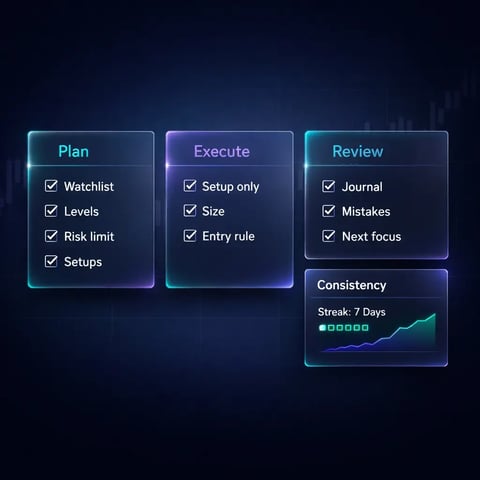 Consistent trading success is built through a repeatable process, not a one-time breakthrough.
This hub shows you how to set up a practical trading routine, create a strong feedback loop with journaling and reviews, and make improvements without falling into strategy hopping. Use it to reduce recurring mistakes, build discipline, and track progress over time.
On this page:
 What is a feedback loop?
Core trading routine guides
Trading process FAQ
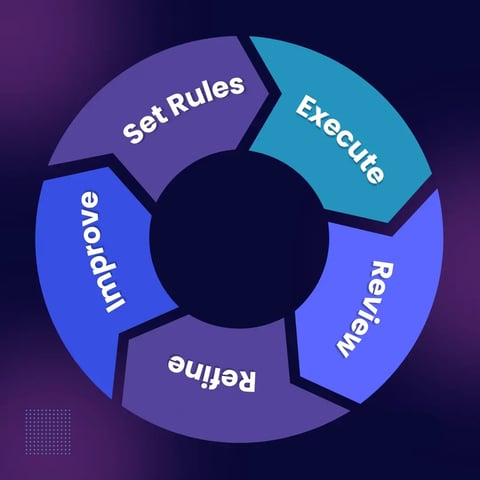 A good trading feedback loop is a simple system that turns every week of trading into useful information and clear next steps. It works by consistently capturing what happened (your trades and decisions), reviewing it with a few objective questions, and then making one focused adjustment. The goal is not to “analyze everything,” but to create a repeatable process that helps you improve without overreacting to short-term results.
A strong feedback loop has three parts: tracking, review, and implementation. You track trades in a journal (including mistakes and rule adherence), review performance over a meaningful sample, and then choose one change to test in the next cycle. Over time, this reduces recurring mistakes, strengthens your best setups, and builds consistency because improvement becomes a routine—not a random event.
Best trading journals
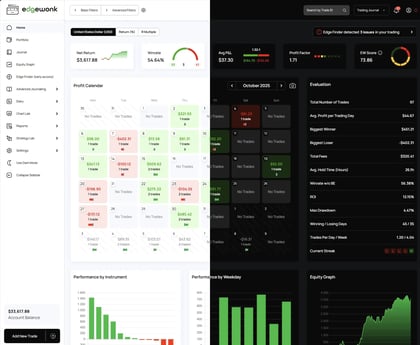 Choosing the right trading journal is essential for traders wanting to analyze performance, refine strategies, and improve consistency. In this article, we compare popular trading journals—Edgewonk, Tradersync, Tradervue, TradesViz, and TradeZella—breaking down their features, pricing, and unique offerings. Explore which journal best fits your needs and trading style...
Become profitable in 8 steps
 What does it take to become a successful trader? Having mentored traders for the last 8 years, we have seen a lot of traders come and go. But we have also seen similarities among the traders that have shown great progress. This is why we have compiled the eight steps that traders have to go through in order to improve their trading and, hopefully, start making money.
Backtesting guide
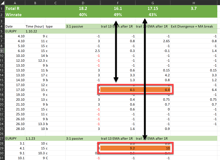 Backtesting is a methodical approach where traders evaluate the effectiveness of a trading strategy by applying the rules to historical data to see how the trading strategy would have performed. This technique allows traders to simulate a strategy's performance without risking actual capital to find potentially profitable...
The perfect trading routine
 An effective trading routine will help any trader improve his results while allowing him to reduce his trading time significantly. I, for example, rarely spend more than 1 hour per weekday on my trading and I will show you how you can become more effective and efficient in your daily trading as well...
10 best trading habits
 We have mentored thousands of traders over the years and in this article, we explore the top 10 trading habits that have proven effective for traders. From the importance of disciplined risk management to the need for ongoing improvement, these habits are the cornerstone of a successful trading approach...
How to become a full-time trader
 If you ask people why they are trading, 90% will answer because of the freedom, independence and the possibility of generating massive amounts of money by working from home. But does this really reflect the reality of professional, full-time trading and what are the things a trader has to consider when replacing his day-job with trading
.png?width=64&height=64&name=icons8-trading-64%20(1).png)
Price Action
Read price clearly with candlesticks, key levels, and practical entry triggers.
Top guides: Supply and demand trading · Trendline trading guide

Chart Patterns
Learn continuation and reversal patterns, breakout rules, and how to spot fakeouts early.
Top guides: Cup and Handle · Triangle pattern guide

Market Structure
Understand trends and ranges using swing structure, breaks, and regime shifts.
Top guides: Elliot wave analysis

Trading Indicators
Use indicators such as moving averages, RSI, volatility tools, and simple filters.
Top guides: Moving Averages · Bollinger Bands

Risk Management
Build consistent risk rules with position sizing, stop placement, and reward-to-risk planning.
Top guides: Reward to risk ratio · Position sizing
.png?width=64&height=64&name=icons8-mind-64%20(1).png)
Trading Psychology
Improve execution by fixing common mistakes, managing emotions, and building discipline.
Top guides: Why 95% of traders fail

Trading Strategies
Explore proven strategy types—breakouts, pullbacks, trend following, and mean reversion.
Top guides: 3 trendline strategies · Day trading strategies

Trading Process & Improvement
Develop consistency with journaling, reviews, metrics, and a repeatable trading routine.
Top guides: Best trading journal · Backtesting guide