
Trading Psychology
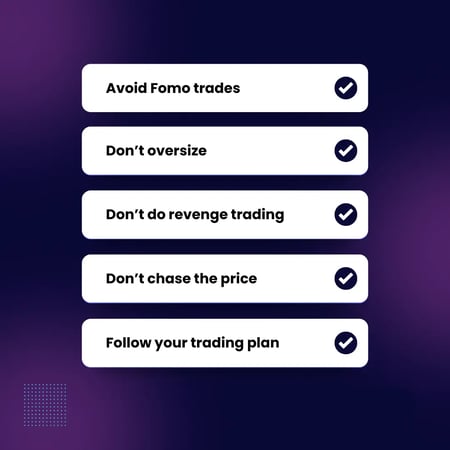 Most trading mistakes aren’t technical, they’re behavioral: hesitation, FOMO, revenge trading, overtrading, and breaking rules at the worst possible time.
This hub helps you understand the mental patterns behind those decisions and replace them with habits that support consistency.
Use it to improve discipline, reduce emotional trading, and execute your plan the same way in real market conditions.
On this page:
 What is trading psychology?
Core trading psychology guides
Trading psychology mini course
Trading psychology FAQ
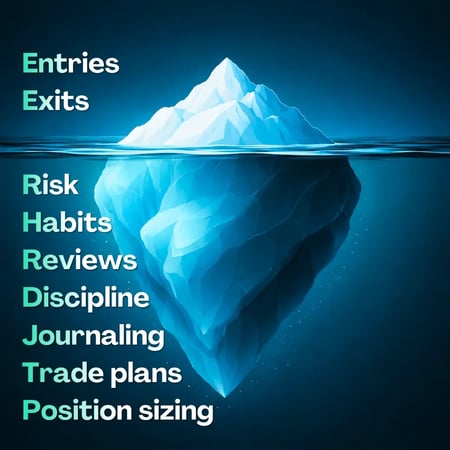 Trading psychology describes the mental and emotional factors that influence how traders make decisions under risk and uncertainty. It affects how you handle losses, manage winning streaks, follow your trading plan, and execute under pressure.
Many trading mistakes are psychological and not technical. Moving stop losses, overtrading, revenge trading, or skipping valid setups usually happen because emotions override rules.
Successful trading psychology is not about eliminating emotions. It is about building structure: fixed risk per trade, clear entry and exit rules, defined reward-to-risk ratios, and thinking in large sample sizes instead of reacting to single trades.
Why 95% of traders fail
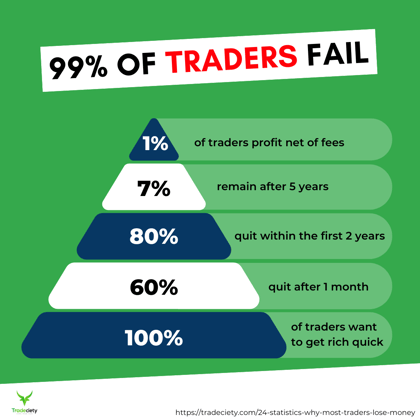 “95% of all traders fail” is the most commonly used trading related statistic around the internet. But no research paper exists that proves this number right. Research even suggests that the actual figure is much, much higher. In the following article we’ll show you 24 very surprising statistics economic scientists discovered by analyzing actual broker data and the performance of traders. Some explain very well why most traders lose money...
10 best trading psychology books
 The following article explores a curated list of influential books that delve into the mental and emotional aspects of trading. These works, authored by esteemed experts in psychology and trading, offer invaluable insights into managing emotions, developing discipline, and understanding the psychological factors that influence trading decisions...
When emotions destroy you
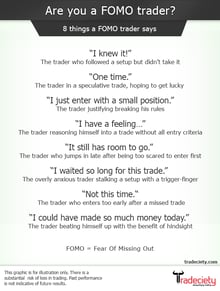 Most traders just talk about fear and greed, but emotions go much deeper than that in trading. At the same time, it is not practical to stop at fear and greed. We need to identify the situations in which emotions take over and then develop action plans to conquer the emotional responses...
Trading psychology crash course
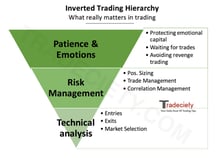 Let me make a blunt statement which is 100% true: All trading issues and all trading failures are caused by emotions. When a trader fails, it is never because they read charts incorrectly, but because they have flaws in their trading psychology. And when it comes to specific trading issues and failures, the points below account for the majority of problems traders deal with on a daily basis:
Tips from Jesse Livermore
 There are only very few traders who have a reputation like Jesse Livermore. In his book – Reminiscences of a stock operator – he talks about his extraordinary life and how he went from working in an old-school bucket broker shop after school, to earning and losing millions of Dollars trading and speculating...
If you want a structured introduction to price action, start with our free Price Action Trading Course on YouTube.
In about an hour, you’ll learn how to read charts with clarity. From candlestick behavior and price patterns, to trend analysis and practical trade execution.
It’s a practical walkthrough you can apply across markets and timeframes.
In this course you’ll learn:
How to read candlesticks and use comment candle triggers.
How to identify trends and understand market structure.
How to spot breakouts and pullbacks.
How to combine price action into simple strategies.
.png?width=64&height=64&name=icons8-trading-64%20(1).png)
Price Action
Read price clearly with candlesticks, key levels, and practical entry triggers.
Top guides: Supply and demand trading · Trendline trading guide

Chart Patterns
Learn continuation and reversal patterns, breakout rules, and how to spot fakeouts early.
Top guides: Cup and Handle · Triangle pattern guide

Market Structure
Understand trends and ranges using swing structure, breaks, and regime shifts.
Top guides: Elliot wave analysis

Trading Indicators
Use indicators such as moving averages, RSI, volatility tools, and simple filters.
Top guides: Moving Averages · Bollinger Bands

Risk Management
Build consistent risk rules with position sizing, stop placement, and reward-to-risk planning.
Top guides: Reward to risk ratio · Position sizing
.png?width=64&height=64&name=icons8-mind-64%20(1).png)
Trading Psychology
Improve execution by fixing common mistakes, managing emotions, and building discipline.
Top guides: Why 95% of traders fail

Trading Strategies
Explore proven strategy types—breakouts, pullbacks, trend following, and mean reversion.
Top guides: 3 trendline strategies · Day trading strategies

Trading Process & Improvement
Develop consistency with journaling, reviews, metrics, and a repeatable trading routine.
Top guides: Best trading journal · Backtesting guide